
by Parenthood In Mind | Feb 18, 2026 | Becoming a parent
By Natasha Williams
IVF isn’t just hope – it’s grief, loss, identity shifts, and the quiet heartbreak no one prepares you for.
For many people on the outside looking in, they believe that having In vitro fertilization (IVF) means entering a process with excitement around being able to have a baby, choosing the sex and the delivery date. However, this is far from the experience of most.
Millions of couples, single women and men, enter IVF under the gaze of being told it is their only option. For some this may be due to male infertility, female infertility or a combination of both. Whilst it is different for everyone, what is the same for most is a process of thinking “it was not supposed to be this way”.
This is what I hear many people say when they enter therapy. For many, it is the first time they have encountered a sense of failure. The were the “good guy” or “good girl” who had a very clear equation, working hard = success. Whatever way that may be. It may have been success in education, work, relationships or lifestyle. Yet never in their wildest dreams did they think they would have to work hard at having a family.
Disenfranchised grief
Whilst IVF can provide a sense of hope, there is also a sense of grief, a grief that not many know and that is “Disenfranchised grief”. Disenfranchised grief is a term coined by Dr Kenneth J Doka (1989). The concept describes the fact that some forms of grief are not acknowledged on a personal or societal level in modern Eurocentric culture. In other words, it can be a loss that is not openly acknowledged, socially validated or publicly mourned. Resulting in those grieving not feeling able to openly speak about their loss.
When entering the journey of IVF, there can a loss of the Reproductive narrative, how we thought our journey to parenthood maybe. There can be a loss in terms of identify, status, relationships, time and finances. Those often entering IVF may feel different to anyone else they know, for some they may have to consider donor conception as an option to having a family. They may have to watch friends and loved ones start their family with perceived ease. This loss includes how they view themselves, others and the world.
Navigating the decision to have IVF
Trying to navigate the decision to engage in IVF can have an impact on one’s sense of self, others and the world. Some people I have worked with have shared that being advised that they would need to consider IVF was more stressful than IVF itself. They believed their body had failed to do what it wanted as supposed to do. They felt the unfairness, anger and jealousy of friends and family who were starting their families with ease, or even unplanned.
Disenfranchised grief due to having to enter IVF can also have a physical and emotional impact. Often there is also an impact on work and careers, as the focus on IVF may dictate what individuals can emotionally and physically tolerate.
Some physical and emotional symptoms of disenfranchised grief due to starting the IVF journey include,
- Changes to eat or sleeping patterns
- Weight gain or loss
- Lethargy
- Decreased confidence
- Feelings of anger, sadness, guilt, shame
- Feeling disconnected to others, resulting in changes in relationships
- Feeling isolated and a deep sense of feeling alone
This is not an exhaustive list and many people process grief in differing ways. Grief is not linear. Grief cannot be fixed or resolved, although it is acknowledged that there are many theories about managing grief. This includes the Kubler-Ross (1969) “five stages of grief” or the “Growing around grief” theory developed by Dr Lois Tonkin (1996) who believes grief is a process of growth and adaptation. In order to manage and work through the symptoms of grief there are various things you can do and feel a sense of control.
5 steps to cope with disenfranchised grief
Understand your grief
Try to understand your grief. This maybe talking it through with those close to you. It may involve reading about grief, listening to podcasts or speaking with a Psychotherapist.
Seek support
Disenfranchised grief can lead to significant changes in your relationships with others. Some people will try and understand how you are feeling and some will not be able to understand. Finding your support network is important and it may be people you have never considered before. This maybe within online forums, social media groups, community groups.
Be patient with yourself
Feelings of grief can hijack you without warning. Sometimes this can lead to feeling overwhelming sadness, jealousy, guilt, anger or frustrated with yourself or others. You may also have times of feeling extreme anger at the situation, how things should have been, yourself, your partner or just the world. This may include others who are having children. But be kind to yourself. In days when it is difficult, it’s ok to slow down your pace, or use distraction if you need to. It’s ok to be tearful or angry, try not to judge yourself. Instead ask yourself what would you say to a friend who was in this position.
Give yourself permission to feel. The emotions of grief can ambush you out of nowhere. However, there is no ideal time to cry or scream. So just let yourself have these moments.
Express how you are feeling
Writing a journal about how you are feeling and what you need or do not need will help make some sense of your experience.
Writing about how you would like your future to look like can also provide a sense of hope and some control in a situation that feels like there is no control. This may be writing about what type of clinic and consultant you want for your IVF treatment, when you would like to start IVF treatment, what support you will need.
If you do not like writing you could be creative and draw, sing or dance to express how you are feeling.
Seek moments of happiness
Often when we are grieving, we have an ambivalent feeling around any form of happiness. However, sadness and happiness can co-exist. So, seek out things that can give you joy. This may mean thinking about your needs first. Ask yourself if I make this commitment, go to the event, see the person, will I enjoy it, will it meet my needs, will it be helpful for me.
This may mean having to distance yourself from friends with children, social events, texts messages / WhatsApp groups, but this is ok. This intense feeling will not last forever.

by Parenthood In Mind | Dec 3, 2020 | Becoming a parent
Imagine someone saying to you when you have a newborn that you will not have time to text or email someone back all day, even if you wanted to or were determined too. This may be hard for you to consider or contemplate. You may question how that is possible.
For the most part, we have lived a life of freedom. Texting others when we feel like it, meeting people after work, going out shopping at a whim etc. We often live routine, organised lives where we are in control, or at least think we are.
All of this changes in a heartbeat. Once we become mothers, our sole focus at first is our babies. We can’t just nip to the post office, or meet a friend for a coffee at a moment’s notice… This focus is a natural response, but also needed, as babies cannot survive without us. What we may not take into consideration though is how this huge shift may impact.
Some of us may be able to handle this change with ease, whereas others may struggle. Some of us may become depressed.
Managing Expectations
Nothing can really prepare us for having a newborn, yet our expectations and our narrative around having a baby can hinder our ability to cope.
Many times I have heard new mothers say “this experience is so far away from what I expected”. Often these same mothers have high expectations or idealistic views of how it will be. Possibly because they want it to be that way as they need it to be that way. There is a lot riding on this, and having this baby has to make us happy. Perhaps they can’t face it being hard. It will be too much. They won’t be able to cope.
As humans, it is impossible to not have expectations. This is what we do. However, something we could get better at is reflecting more on these expectations. Why these ones and not others? How realistic are these expectations? If unrealistic, why do we have them? What are we trying to say about ourselves with these expectations? Digging a bit deeper can help us to understand ourselves more and prepare us more for the huge transition we are about to encounter.
The pressure on new mothers is immense. Just look at the following statements:
I need to be a perfect mother.
I need to get everything right.
I need to do it all myself – I am the baby’s mother after all.
I need to be able to read the baby’s cues all the time.
These all or nothing statements which are after all expectations can play havoc on our wellbeing. We suddenly become critical of ourselves – I am useless, I can’t do this, I am such a failure. These critical thoughts can then lead to feeling depressed about ourselves. Being able to reflect more on these statements though can help us to see that failure is inevitable. We can’t live up to these expectations and nor should we.
Donald Winnicott, an eminent psychoanalyst and paediatrician, stressed that the mistakes and ruptures that happen when we interact with our babies are part of the process. It’s how you mend them that is important. In other words, we need to make mistakes to help our relationship with our baby.
What is Postnatal Depression
Perhaps we should be looking at all of this from a different perspective.
Paula Nicolson argues that postnatal depression should not be defined as such, and that it should be assumed or expected that new mothers who go from independent, working, freedom loving women to the opposite, will at times struggle. This should not be a surprise, it should be a given.
If we are able to think more along these lines, maybe it will be easier for us to accept when we make mistakes or feel we can’t cope at times.
Too often new mothers suffer in silence, wondering why they are not functioning or managing, when they feel they should be.
I wonder if we can be kinder to ourselves, acknowledge this is difficult and breath a sigh of relief that we are getting through this.
If not, therapy may be able to help you get to this point.
Dr Helena Belgrave – Counselling Psychologist specialising in perinatal issues
Resources:
Paula Nicolson (1998) ‘Post-Natal Depression’
Jan Abram (2007) ‘The Language of Winnicott’
by Parenthood In Mind | Sep 7, 2020 | Becoming a parent
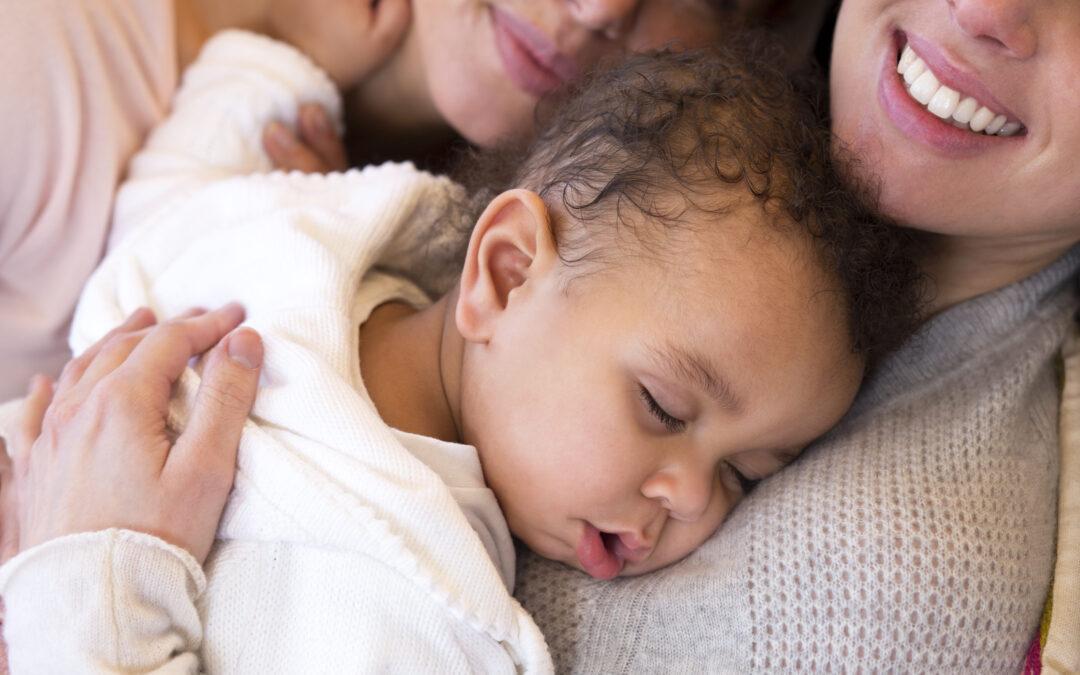
Whether planned and longed for or coming as a surprise, there’s no predicting how you’ll react when a baby is on the way. Some parents describe feeling ‘love at first sight’ on greeting their baby for the first time. But to many this can be a misleading expectation, causing anxiety and guilt when they do not feel this way. ‘Bonding’ with your baby is a gradual process, whatever intense emotions may surround the birth. As in other relationships, and it takes time and ongoing work to grow to understand and tune in to each other. And after all, babies don’t have spoken language to help us make sense of what is going on inside their minds and bodies. But they do communicate through a variety of cries, expressions and gestures, and they sense your close attention to what they’re experiencing as they adapt to life outside the womb, even if you feel that you haven’t a clue!
- Try to think of this as a shared journey of discovery about each other, rather than getting it ‘right’ or ‘wrong’.
The Shock of the New
Even after a ‘normal’ full term delivery feelings of shock can dominate, for mothers and others present at the birth. And there is bound to be more preoccupation and worry when there are complications. Adoptive parents too may find it disconcerting not to feel overwhelmed by love for a child they have long awaited; ‘Surely this is what I always wanted, why don’t I feel ecstatic?’. As reality dawns that life will never be quite the same, fear of the unknown and the daunting responsibilities of parenthood are likely to surface, as well as excitement about the future. So, remember, it’s common to experience ambivalence about parenthood, during pregnancy and after the birth, though some new parents are more troubled by conflicting thoughts and emotions than others and may benefit from professional help.
If you are well enough to spend close time gazing at your newborn soon after the birth this can be a wonderful period to start weaving together the fantasies and expectations formed in pregnancy with the reality of the little person (or people) now in front of you. Healthy new-borns usually spend quite a bit of time in a ‘quiet alert’ state, ideal for taking it all in, and even imitating parents’ facial expressions. If there are other children in the family your focus on the newest arrival may be clouded by concerns about the impact on others as the family adapts and expands. Even if it isn’t your usual way, try to accept or ask for help as much as you can.
- This relationship is unique and getting used to each other is as new to your baby as it is to you, whether you are a first-time parent or not.
Talking to others
New parenthood can be very isolating – being with a baby doesn’t compensate for the loss of adult company. If you can brave talking to other parents and those near to you when you feel things aren’t going so well this can help to dispel worries and you’ll feel less lonely. Your Health Visitor or GP are also there for support, and can refer you on for specialist help if need be. Try to be open about your feelings. One new mother felt she was ‘just going through the motions’, as if it was ‘someone else’s baby’ she was looking after. As this persisted beyond the early weeks, when exhaustion often colours everyday experience, her HV referred her for parent infant psychotherapy and she gradually began to feel more lively and connected to her baby. A father was surprised to feel excluded by his partner’s intense involvement with their baby, reviving some childhood feelings of being ‘left out’ in the family. His guilty rivalry with the baby got in the way of involving himself more and he and his partner rowed about his perceived lack of interest. They attended some sessions together with the baby. Reflecting on how parenthood was impacting on their relationship helped them communicate more about how they were each changing and to make way for the newcomer.
- New parenthood is very demanding but also a time when relationships can grow and deepen if you work at communicating.
Sara Rance
Child Psychotherapist specialising in psychotherapy with parents and infants and children under 5.
Other resources:
The Association for Infant Mental Health ‘Getting to know your Baby’ videos http://www.aimh.org.uk/parent-resources
Dilys Daws & Alexandra de Rementeria (2015) ‘Finding your Way with Your Baby’

Recent Comments